

A book with three reviews looks unfinished next to competitors with three hundred. The instinct to close that gap fast, by asking every friend, relative, and coworker to leave a rating, is understandable and also one of the fastest ways to get reviews removed or an account flagged. The good news is that closing the gap does not require any of that. It requires knowing which tactics are actually built for this and using them consistently.

Why Asking Friends and Family Backfires
Amazon's review policies restrict reviews from people with a personal connection to the author, including relatives, close friends, and business associates, regardless of whether the review is positive or honest. This is separate from Amazon's rules on incentivized reviews. Amazon's own announcement of its 2016 policy update banned free-product-for-review arrangements outside its invite-only Vine program, but explicitly carved out books: "We will continue to allow the age-old practice of providing advance review copies of books." Do not offer compensation or another benefit in exchange for a review, and always check Amazon's current Community Guidelines before running a review campaign, since platform policies do shift over time and the specifics matter more than any single summary of them. Beyond the policy risk, reviews from people who did not choose the book independently rarely read as credible to a stranger deciding whether to buy anyway.
The Number That Actually Matters Most Isn't a Big One
It is tempting to assume you need hundreds of reviews before they start doing real work. Research from Northwestern University's Spiegel Research Center found that purchase likelihood for a product with just five reviews is 270 percent higher than for a product with none, and that the marginal benefit of each additional review drops off quickly after that point. For a book with zero or one review, the realistic goal is not a five-figure review count. It is getting past that first small handful, since that is where most of the credibility gain happens.
The Ask Readers Are Already Being Given
Every Kindle reader sees a native prompt from Amazon itself at the end of a book, inviting them to rate or review what they just read. You cannot add or customize this prompt, but you can make it more likely a reader actually acts on it by giving them a reason to stick around at the very end rather than closing the book the moment the story or argument concludes. A short, genuine note in your back matter, something like asking readers to consider leaving their honest thoughts if the book was worth their time, works alongside that native prompt rather than replacing it, and does not require offering anything in return.

Building Reviews Through a Real ARC Process
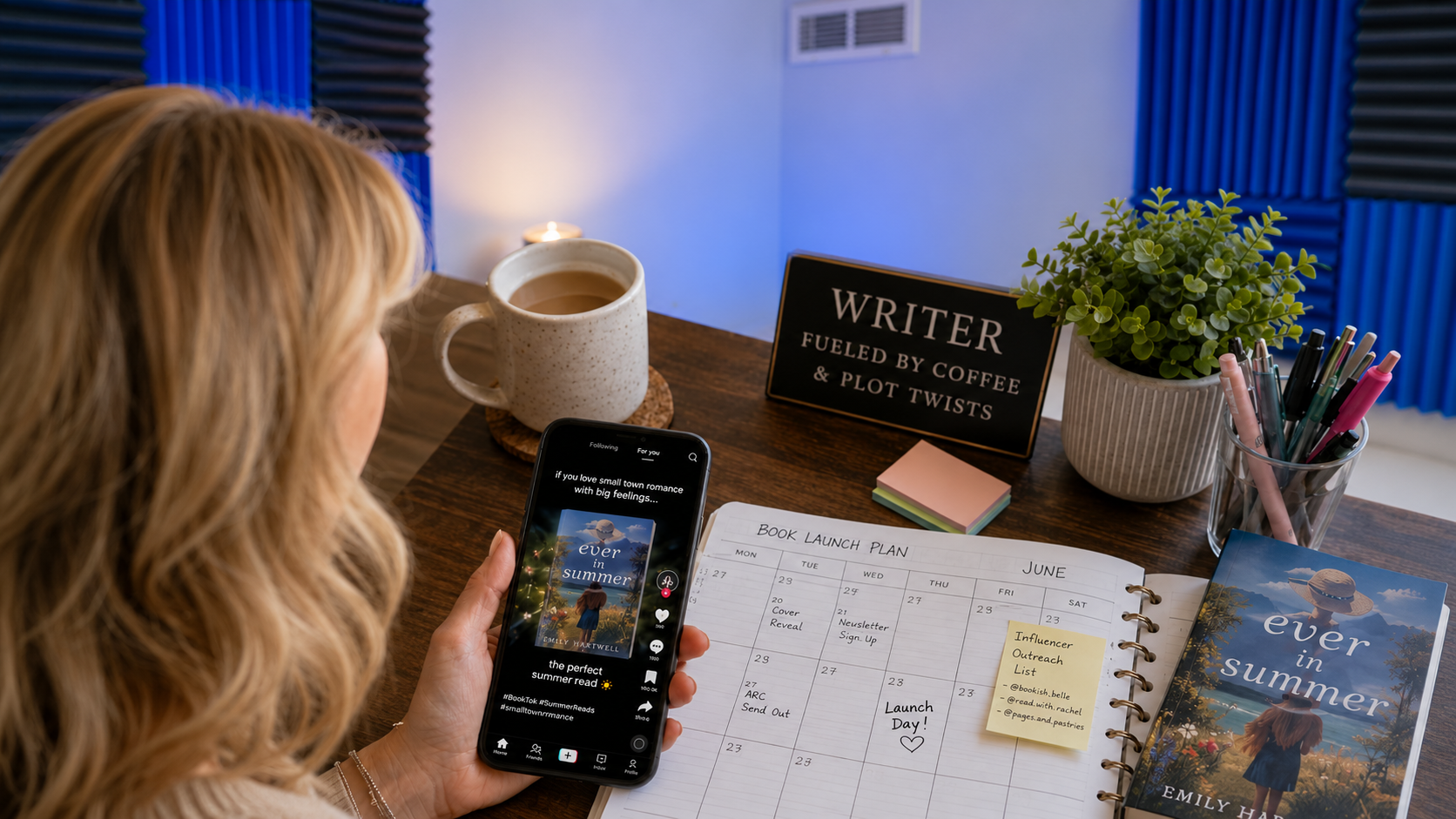
Back matter helps capture reviews from people who already finished the book. ARCs solve a separate problem: generating a batch of honest reviews timed around launch, before organic readers have had time to finish and review on their own. That is where a properly run ARC process matters most. Fantasy author Cindy L. Sell described exactly this in an interview with BookBub Insights, noting that after screening sign-ups and distributing copies through BookSirens, nine readers requested her debut and seven of them followed through with reviews around her launch, a modest but real batch of reviews she would not have had otherwise. Our posts on what an advance reader copy actually is and getting advance reader copies into the right hands cover how to run this correctly, including the exact language to avoid so an ARC offer never crosses into requiring a review for a free copy.
Editorial Reviews Are a Different Lever Entirely
Customer reviews are not the only kind of review your Amazon page can carry. Through Author Central, you can add editorial reviews, quotes from trade publications like Kirkus or Publishers Weekly, to your book's page directly. Kirkus's own submission process requires significant lead time, so this is worth planning for well before launch, but a strong editorial quote sitting above your customer reviews gives new visitors a credibility signal that does not depend on your review count at all.
Where Podcast Guesting Fits In
If podcast appearances are part of your marketing, listeners are often a strong source of genuine, TOS-compliant reviews, since they arrive already interested in the book's ideas rather than needing to be convinced from scratch. We cover the specific rules and approach for this in more detail in turning podcast listeners into early Amazon reviewers. If podcast guesting is part of your book marketing strategy, download the free Mic to Money ebook to learn how to turn podcast appearances into a repeatable pipeline of readers and leads, not just reviews.
Keep the Ask Honest
However you approach reviews, the request should always sound like a genuine ask for an honest opinion, not a transaction. That tone matters as much in a back-matter note or an ARC email as it does anywhere else in your marketing. Want your marketing to sound like you instead of another generic book promotion? Creating Authentic Content in the Age of AI shows you how to build a consistent voice across your content, including the small, easy-to-overlook moments like a review request. For the fuller picture of how review-building fits into a complete marketing plan, our book marketing ideas guide covers the rest.
FAQ
Can I offer a discount or gift card in exchange for a review? No. Any form of compensation tied to leaving a review violates Amazon's policies, whether or not the review is required to be positive.
Is it okay to ask my newsletter subscribers for reviews? Yes, as long as you are asking for an honest review rather than requiring or incentivizing a positive one. This is different from asking personal friends or relatives specifically.
How many reviews do I actually need before it matters? Based on the research above, the first five matter disproportionately more than any batch after that. Focus early effort on reaching that number honestly rather than chasing a large total right away.
Will removing a negative review hurt my book? Occasional negative reviews are normal and can even help credibility, since an unbroken string of five-star reviews from accounts with no other history tends to look suspicious rather than reassuring.
Ready to build real momentum on your review count without risking your account? Start with the readers who already finished the book and genuinely have something to say.
































.jpg)

.jpg)
.jpg)
.jpg)

.jpg)
.jpg)

















.webp)
.webp)

.webp)









.webp)




.jpg)

.webp)