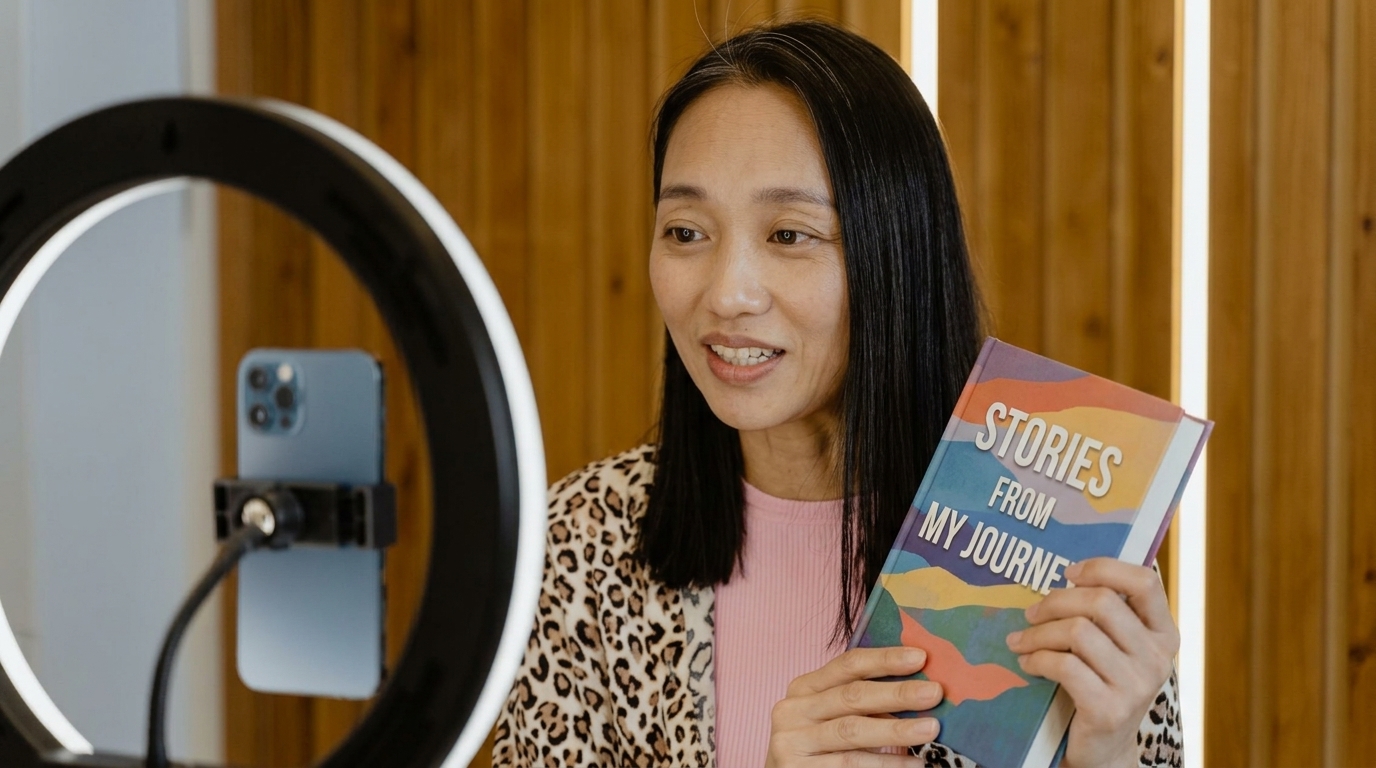

Most authors treat short-form video like a megaphone. They post a clip and hope the algorithm does the rest. The problem is that hoping isn't a social media engagement strategy. A script is. And the right script does more than grab attention. It builds enough trust in 30 to 60 seconds that someone actually wants to buy your book.
Authors like Colleen Hoover and Mel Robbins didn't blow up on TikTok by accident. Their content follows structures that work. Below are eight short-form video scripts you can adapt to your own book, your own voice, and your own audience.
For authors shaping a stronger content voice, FTS Pod’s free ebook Creating Authentic Content in the Age of AI offers a practical framework for creating content that feels clear, human, and trustworthy.
Key Takeaways
- The best short-form video scripts follow a clear hook, value, and call-to-action structure.
- Readers buy from authors they feel they know, so personal and story-driven scripts convert better than promotional ones.
- Using a repeatable script format makes it easier to post consistently without burning out on content creation.
- A strong hook in the first two to three seconds determines whether viewers stay or scroll past.
- Short-form video works best when it gives something away, a tip, a story, a behind-the-scenes moment, rather than just selling.
Script 1: The "I Wrote This Book Because" Origin Story
This one works because people buy why, not just what. You're not selling a product. You're sharing a reason. Start with a personal confession or frustration, pivot to how that led to your book, then close with a reason they need it too.
Sample script:
"I spent three years telling myself I wasn't qualified to write this book. Then I realized the people who needed it most were thinking the exact same thing. That's why I wrote [Title]. Here's what changed when I stopped waiting for permission."
This script positions your book as something born from real experience, which is far more compelling than "my new book is out now." It pulls people into your story before they even know you're selling something.
Script 2: The Controversial Take
Pick one thing your book challenges and say it out loud. Authors like James Clear built massive audiences by saying things that made people stop and think. The goal isn't to offend. It's to make your niche feel seen by naming something others avoid.
Sample script:
"Most productivity books are lying to you. Building better habits isn't about discipline. It's about identity. That's the one shift [Title] is built around, and once you get it, everything else clicks."
This type of script sparks comments and shares, which feed the algorithm and grow your reach organically. Understanding becoming a TikTok influencer starts with learning how to create content that gets a reaction, not just views.
Script 3: The Reader Result Story
Social proof sells books. If you have a reader testimonial or a real story of transformation, turn it into a short script.
Sample script:
"A reader sent me a message last week. She said she quit a job she hated three days after finishing [Title]. I didn't tell her to do that. But the framework in chapter four made the decision obvious. Her words, not mine."
You don't need thousands of reviews to make this work. One specific story beats a generic five-star rating every time.

Script 4: The "What's in the Book" Teaser
This is a straight-up preview. Pick one idea, exercise, or chapter that delivers real value and share enough to make people want the rest. Think of it as a free sample.
Sample script:
"In chapter two of [Title], there's a single question I ask every client before we touch their strategy. Most of them have never been asked it. Here it is: [ask the question]. That's the whole shift. Everything in the book builds from there."
There's a whole body of research around short form video for book marketing, and one consistent finding is that showing a real piece of your content beats any promotional pitch.
If you want help turning your book content into high-performing short videos, the team at FTS Growth Studio offers viral video production built for authors, founders, and creators who want consistent, conversion-focused content. You can also use the Viral Video Blueprint to turn author ideas into short-form content that builds attention around your book.
The Author's Social Media Posting Schedule: What to Post, When, and Where
Script 5: The Behind-the-Scenes Script
People are curious about process. Show them what it actually looked like to write the book, do the research, or work with your editor. It humanizes you and creates a sense of intimacy that polished promotional content can't replicate.
Sample script:
"I rewrote chapter seven four times. This is what I kept cutting, and why it made the final version stronger."
This works particularly well when paired with short form video scripts designed to show process over pitch. Viewers who feel like insiders are more likely to buy, and authors like Brandon Sanderson built massive loyalty doing exactly this.
Script 6: The "I Didn't Expect This" Honest Reflection
Vulnerability converts. Not oversharing, but honest reflection on what surprised you during the writing process. This script format works because it's unexpected. Most authors talk about what the book teaches. You're talking about what writing it taught you.
Sample script:
"I didn't expect writing this book to change how I parent. I was writing about leadership in the workplace. But by chapter five, I realized the same principles applied at home. That surprised me. Maybe it'll surprise you too."
The key here is specificity. A vague reflection feels like filler. A specific one feels like trust. Keep it to one honest observation and let it land before you move to the CTA.
10 Video Hooks Authors Are Using to Sell Books on TikTok and Reels
Script 7: The Problem-First Hook
Name the exact frustration your reader feels before they even know they have it, then position your book as the answer. This works best for nonfiction and how-to books, but fiction writers can use it too by framing around emotional experiences.
Sample script:
"If you've ever finished a book and immediately forgotten 80 percent of it, that's not a memory problem. That's a reading strategy problem. [Title] fixes that in the first chapter."
Effective 10 marketing strategies to promote your book on TikTok almost always start with the reader's pain, not the author's achievement.
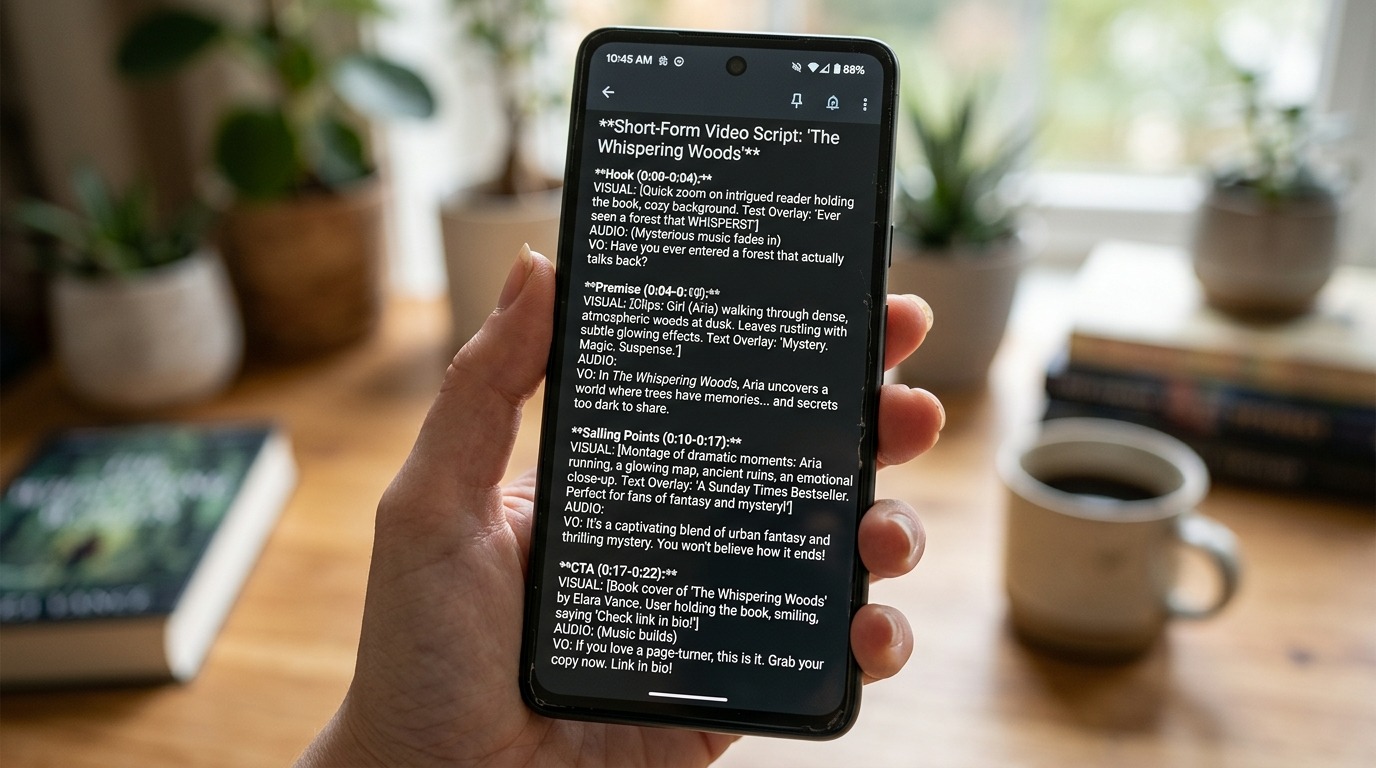
Script 8: The Comparison or Contrast Script
"Before this book vs. after this book." That's the whole structure. It's one of the most efficient ways to demonstrate transformation without a long testimonial or an over-explained explanation.
Sample script:
"Before [Title]: I was running my team on gut instinct and a lot of hope. After [Title]: I have a framework I actually understand and can explain to someone else. The difference wasn't motivation. It was a system."
Authors who want to build a sustainable social media engagement strategy need content that shows transformation clearly. The before-and-after format is one of the most reliable ways to do it. Paired with using reels and shorts to grow your author platform, this structure can compound your reach over time.
If you want help turning short-form videos into a clear, consistent content system, download FTS Pod’s free ebook Creating Authentic Content in the Age of AI. Authors who want more free resources can also explore FTS Pod’s ebook library, which includes guides on authentic content, podcast monetization, AI visibility, and growth strategy.
Start With One Script, Not Eight
You don't need to post all eight of these this week. Pick the one that matches where you are right now. If you just launched, try the origin story or the reader result script. If you're building awareness before a launch, the controversial take or problem-first hook might be the better fit.
The goal of a strong social media engagement strategy isn't to post more. It's to post content that consistently moves viewers closer to buying. These eight short form video for book marketing structures give you a repeatable starting point.
Try one, track how it performs, and refine from there. That's how you build a video presence that actually sells books.





























.jpg)

.jpg)
.jpg)
.jpg)
.jpg)
.jpg)












.webp)
.webp)

.webp)






.webp)



.jpg)

.webp)